4 WEEKS TRAINING PART 6

SESSION #2

WARM UP – GROUNDBALL + HANDBALL REACTION INTO PUSH BACK KICK

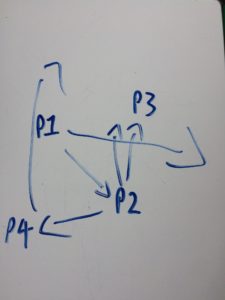
You’ll need groups of 3 with 1 ball per group and but not a lot of space, even with the kicking layer but feel free to use more players per group if you don’t have a heap of balls but make it an odd number so each player rotates through each phase of the drill naturally (roll + press up/groundball + handball).
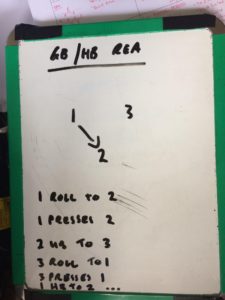
As the image says the sequence is:

  • 1 rolls to 2
  • 1 presses up on 2
  • 2 gathers groundball
  • 3 makes handball receive position
  • 2 gives handball off the deck to 3
  • 3 rolls to 1 and repeat

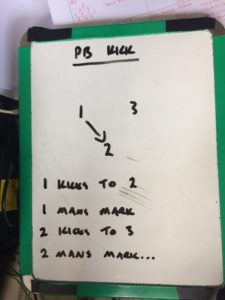
We then layer that into a push back kick with a simialr sequence:

  • 1 kicks to 2
  • 2 marks kick from 1
  • 1 presses up to man the mark
  • 3 makes position to receive kick from 2
  • 2 kicks to 3
  • 2 presses up to man the mark and repeat
KIKCING DEVELOPMENT – CORRIDOR KICK

Set up multiple coned lanes over different distances (below) and set up in groups of 4.
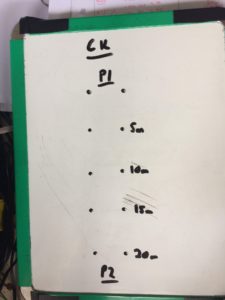
There are several levels to this so the image above is just a sample of how you want to set the cones for a single level but each levels has different measurements which I’ve put in meters but you can do in steps or whatever, just make it consistent.

Level 1 – 15m Long x 1.5m Wide

Level 2 – 20m Long x 1.5m Wide

Level 3 – 10m Long x 1m Wide

Level 4 – 15m Long x 1m Wide

Level 5 – 20m Long x 1m Wide

Initially you might want to set up multiple lanes for the lower levels until players find their edge but you can always add cones to the lower levels quick enough without losing much time.

The challenge to meet before moving up levels is:

Level 1 x 16/20

Level 2 x 14/20

Level 3 x 16/20

Level 4 x 14/20

Level 5 x see what you can do!

DEFENSE – ZONE PRESS UP

MIDFEILD – MOVING THROUGH CONGESTION

As I mentioned at the end of the video, you could make the space bigger and run a 2v2 or so through there with the stationary players as well but you’d need to add a scoring element where making a tackle, interception or pushing the offense outside of the cones is good for more points then the offense getting the ball out of the exit gate to stop them simply guarding the gate because in a game of football you’ll always press the player with the ball.

BACKS – WIDE DRILL

To start out simply run this without any opposition to give players a chance to work together on their ball movement and spread running patterns, telling players that they cannot run the same pattern twice in a row.

Then you can add defenders like this:

1 – Add a defender who can choose to run with options 1 and 3 and the kicker needs to identify the fre option and hit them up.

2 – Switch that defender to now choose to run with options 2 or 3.

3 – Add 2 defenders to go with whoever they want to make it a 4v2.

4 – Add a 3rd defender to make it a 4v3

5 – Add a 4th defender to make it a 4v4 but a defender must man the mark for player 1

To layer again you can simply havea bunch of defenders and send out different numbers of them into each set so the offense must recognise what number advantage/disadvantage they have and play accordingly.

FORWARDS – RUNNING PATTERNS

When we think of forward running patterns we usually think of leading patterns inside 50 but with transition offesne being generated from further away from goal then the good old days, running patterns to get the ball to your half of the ground, then for an inside 50 entry and then a potential goal scoring options all require different running patterns and kicking variations so this is an attempt to cover a few of these.

GAME – FULL GROUND SMALL SIDED TEAMS

Create teams of 8 – 10 should do the trick here who have 1 ball each but players are divided into positions they usually play.

The coach will simply give each team a scenario or pattern to follow from 1 end to the next but players canlt perform the same action 2 sets in a row.

Say 1 team has the patterm of a wide switch kick out of the defensive half.

If 1 of your backline players receives a wide switch kick in set 1 (correct) then they cannot just plonk themselves wide and get the same kick again, they must find another way to acheive the same goal a different way (but staying with their pattern/theme) or in a different part of the ground.

Scenarios or patterns you might look at using include:

  • Full Ground 1 kick, 1 handball
  • Defensive Half Wide/Switch Kick
  • Midfeild Lateral Kick
  • Forward Half 45 Degree Kick
  • All kicks off the line they previous one came in on

You could also include tactical/formation aspects like start up high in a press  and backs need to up past half way before the ball can go past the goal line etc.

The possibilities are endless.

Have 1 team start from 1 end and the other from the opposite end so there is a bit of controlled chaos and congestion.

To go further with this the opposite team players could also be defenders until their own ball comes into their area.

PART 7
4 WEEKS TRAINING – PART 5

Part 1  – Introduction

Part 2 – Warm Up / Kick Development / Defense

Part 3 – Line Work (Midfielders/Forwards/Backs)

The last portion of training is now the games portion which allows to playeres to put into a competitve situation all the different information they’ve taken in and processed during the session so far.

If you’ve designed your training sessions properly it will also add representation to the activities you’ve done leading up to know as well.

I’ve got 7 more of these sessions made up in my folder all consisting of completely different drills with each week building on the next so let me know your interest and if there’s a groundswell then I’ll release them them into a package for purchase.

GAMES DRILL – MIXED SQUARES

Players Required: Entire training group but break up into 3 groups of top senior, bottom senior/top reserve and bottom reserve/thirds groups so everyone is challenged as close as possible to their edge range.

Balls Required: 4

Space Required: Half of the Ground

Drill Level: Moderate to Hard

The numbers and area sizes I’ve gone with in the video aren’t set in stone as it will depend on your training group size but the idea is to use a big/kick, medium/hybrid and small/handball sized game.

BIG/KICK GAME

I would look at using a possession football game counting each kick that is marked by a teammate. If the ball hits the ground then play on but if it gets in dispute then it’s a turnover so the ball can hit the ground if a teammate can gather it and play on.

The ball hits-the-ground-turnover rule makes no sense in local/amateur football considering it spends most of the time there during our games – train what does happen not what you want to happen.

So if team A gets 8 possessions then turns the ball, over then they start from 8 next time they get it and so on for time.

MEDIUM/HYBRID GAME

Give each team a ratio they have to play by such as 3 kicks + 1 handball v 4 kicks + 1 groundball + 1 handball.

Teams score a point when they complete their ratio but if there is a turnover mid ratio then they start again.

To make it even harder you could have teams follow the ratio in order.

SMALL/HANDBALL GAME

4 Goal Game is a solid handball game to play in congestion a small to medium sized area but you could easily use 1 set 2 sets of goals in a smaller area.

You could roll with a Progressive Pressure Rondo Drill, a keepings off game like the kicking game but for handball or a ratio game with groundballs like the medium game.

Go silly.

How you score these games are also up to you depending on if you use a game based on scoring with goals or goal players or a game based on possession count (possessions in a row, time with ball etc).

As you’ve got 3 groups/6 teams you can also have the bottom team/s play less time as they will probably have less fitness than the top group/s and thus won’t be able to tolerate the same workload before fatigue sets in causing nothing but skill errors and potential injury now or later down the track.

PART 6

4 WEEKS TRAINING – PART 4

Part 1  – Introduction

Part 2 – Warm Up / Kick Development / Defense

At this point we’re about 30 – 35mins into the session and it’s time to break into groups.

Grouping your players into their specific lines that they’ll most likley play in is all part of the stream lining approach as well as making training ore specific to each player.

So break your players up into backs, midfielders and forwards but there might be a little bit of switching of players depending on the drill as I’ll outline below.

MIDFIELD DRILL – STOPPAGE QUARTERBACK

Players Required: Depends on your total training numbers but you want to set up 4 groups of 4 – 6 players if possible which might mean you include all players in this drill or pull some half forwards and half backs from the other groups to make up the numbers but only if it allows you to still run the forwards and backs drills at the same time, otherwise use the entire squad for this one.

Balls Required: 4

Space Required: 35 x 35m

Drill Level: Moderate

Our home ground is literally a postage stamp (125 x 80m I reckon) so to be able to create room to play into we like to play out the back of the contest instead of simply running into congestion that’s simply there because they have nowhere else to go!

So this is my game model specific but you might have other tactics and strategies you’d rather focus on.

Level 1 – Outnumber game + quarterback waiting on the outside for the whistle who kicks to a lateral/or 45 degree lead coming from the next box

Level 2 – Outnumber game but the quarterback is 1 of the offensive players from the outnumber game so you can either nominate the player or nominate the side you play the ball out of and the closest player pulls out and the others get it to them for again hitting upa lead from the next box. This is probably your best option if training numbers are low but it’s will decrease the chance of success a fair bit from level 1.

Level 3 – Outnumber game + quarterback waiting on the outside hitting up the kick into the middle of the playing area which will require a kick into some congestion.

Level 4 – Outnumber game but the quarterback is 1 of the offensive players and you are to hit up the kick into the middle of the playing area again requiring a kick into congestion.

Level 5 – If you’re feeling extra spicy then introduce both leading options to the outside of the box and to the middle of the playing area but have the defender go with 1 of those options so the kicker must find the open option. With 1 defender success might come easy for the kicker as the defender might be too tired to actually get to 1 of the leading players but multiple defenders they’ll nominate between themselves who will defend the lead and it’ll be much harder as they’ll be less fatigued and the kicker won’t be aware of which defender to kick away from.

BACKS DRILL – SCAN AND KICK

Players Required: 10/group

Balls Required: 1/group

Space Required: 20m x 2om

Drill Level: Easy to Moderate

In most cases I would start with some game model rehearsal based activities such as the quarterback drill like above and the forward line drill below but for the backs that first kick has to be safe and it has to hit the target so as not to put the defense under repeat pressure on top of other backline players pushing forward to provide options up the ground leaving the defensive 50 vulnerable if there’s a turnover.

Level 1 – 1 side leading but have the kicker have to kick outside and inside their body

Level 2 – both sides leading but 1 side only leads every 2nd kick so it’s half the decision making requirement

Level 3 – both sides leading each time and the kicker can kick inside or outside their body depending on where the open target is

On top of these levels you could also challenge your better kickers by allowing them to attempt kicks with a defender but 2 misses in a single training session and they lose that privilege for the remainder of the drill.

Player 1 receives 20 passes from player 2 and see’s how many targets they can hit up and do each player 2 – 3 times each.

FORWARDS DRILL – GAME MODEL REHEARSAL

Players Required: 8/group

Balls Required: 1/group

Space Required: Forward Half of the Ground

Drill Level: Easy

Level 1 – As above

Level 2 – Add 1 defender to play against the player 2 in board kickor the player 3 and 4 fat side leads. The sole defender will start with each group in the congestion and can decide to go with whichever forward they like so there’s some decision making to be made by the other players there.

Level 2 – Add 2 defenders who can choose who they go with but also decreases the forward outnumber advantage

Level 3 – Add 3 defenders which brings the numbers to evens but defenders must man the mark of marked kicks

Level 4 – Add more players to the scenario

PART 5

4 WEEKS TRAINING – PART 3

Let’s look at the first 3 parts of the session and my thoughts on each of them as well as the specific training drills I would use, being:

  • Warm Up
  • Kicking Development
  • Defense

WARM UP

You’ve got 180mins total time to train each week at 90mins per session.

Not long really when you need to cram in skill development, team/line tactical work as well as all the physical-based work teams like to do.

With all these non-negotiables you need to find a way to majorly streamline your warm up.

The days of 2 laps with some stretches thrown in haphazardly should be left to die as it’s 15mins out of your 90mins per session essentially wasted.

You can warm up and get benefit out it at the same time.

DRILL – 4 PLAYER HANDBALL REACTION INTO 4 PLAYER KICK REACTION

Players Required: 4/group

Balls Required: 1/group

Space Required: 5 x 5m + 15 x 15m

Drill Level: East to Moderate

Sequence 1 – 50% intent x 3mins x handball then kick

Sequence 2 – 70% intent x 2mins x handball then kick

Sequence 3 – 90% intent x 1min x handball then kick

Total Time – 16 – 18mins with plenty of skill specific actions performed at progressive intensity to prepare for the main session + plenty of game representational touches of the football unlike 1 player rolling the ball straight to you repeatedly in a line up.

Make your think players think early and think often because whoever thinks the best on game days wins – win training then win the game!

If players want to stretch or whatever then they must do it before the team warm up starts otherwise they miss out.

KICKING DEVELOPMENT

I posted this exact drill just last week so I’ll just link it here and all you need to know is that skill CANNOT and WILL NOT be developed or improved under fatigue – that’s I’ll say on the matter.

DRILL – 4v2 (+) DECISION MAKING

Players Required: 5 – 7/group

Balls Required: 1/group

Space Required: 20 x 20m

Drill Level: Moderate to Hard

DEFENSE

Apart from the odd zone kickout defense never gets trained and for something that has shown to win games, premierships even, this is just crazy talk.

Good defense can start offense but it doesn’t work the other way around so to give your team flexibility, being solid defensively as a team and individually is a must.

I will start training defense with a game called Trap the Player to teach the basic concept of pressing the ball carrier.

DRILL – TRAP THE PLAYER

Players Required: 6 – 8/group

Balls Required: 1/group

Space Required: 10m x 10m

Drill Level: Moderate to Hard

Level 1 – 5v3 in a 10x10m area

Level 2 – 4 v 2 in a 10x10m area

Level 3 – 5v3 in a 15x15m area

Level 4 – 4v2 in a 15x15m area

Even though a lot of coaches do games based activities at training unless it’s literally said, the focus on defense as opposed to offense is not even close which is a travesty as a) you need to train defense obviously, but also b) your offesne will get trained to higher level if you train against better defense.

Anyway I would purposefully say that this is a defensive based activity to get players in that specific frame of mind.

As mentioned in the video you simply play keepings off and the point of the activity is not to necessarily tackle or dispossess the player with the ball but rather trap a player with the ball in the corner using all or some of the defensive players.

I would give the defensive teams plenty of opportunities to strategise here using breaks between reps for them to do so and see who comes up with what before guiding them in the direction you want them to go if they don’t do so on their own.

My next post will be line specific drills for mids, defenders and forwards.

PART 4

4 WEEKS TRAINING – PART 2

Late last year with the uncertainly around the lifting of restrictions here in Melbourne, coupled with my then-team not having a committed senior coach at the time, I put together an 8 session pre-Xmas training plan if on the off chance that we still didn’t have a coach yet needed to get back into training.

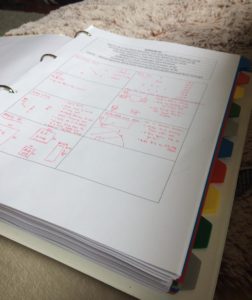
In the end I spent countless hours going through all my drills I have on file, drawing them up, printing them out and making out a folder so I could categorise them all.

From there I went to work and ordered each drill within their own category to form a progression of training activities for that category.

I must have reordered them 5 times as I devised different ways to categorise them but time was a-plenty.

In the end my categories ended up being:

  • Warm Up
  • Kicking Development
  • Defense
  • Midfielders / Defenders / Forwards (split up into seperate groups at times)
  • Game

Within each positional category they were then broken up into:

  • Game Model Rehearsal
  • Positional Tactics
  • Small Sided Games / Scenarios

As stated I built an 8 session plan where no 1 training activity is repeated except for the kicking development category.

The reason for this is that with players having been out of the game for 12 months, I want to expose to them as many situations/problems as possible as soon as possible, forcing them to have to process a lot of different information and then solving all those problems.

I don’t want to do 3 – 4 cone drills that solve the same problem (if you can call no opposition or decision making a problem…hint: you can’t), as we’ll be well behind from the outset and need to “catch up” in fast time.

There are limited cone drills apart from some of the game model rehearsal activities but that’s basically to teach positioning and they will be taken out as soon as possible.

So for this week I’ll lay out the first session of this 8 session plan with all the training activities that I planned for that session.

It will be based on the types of systems our team used last year, which I believe we should build on more rather than “start again” so it might not be ultra specific to all of you but footy isn’t a hard game and we all pretty much want to do the same thing with and without the ball.

PART 3